guide
How to store wine at home: temperature, light, humidity, and which way bottles should lie
How to store wine at home: keep it near 55°F (13°C) and steady, out of light, away from vibration and odors, and corked bottles on their side. Plus opened bottles, closets, wine fridges, and what's worth aging.
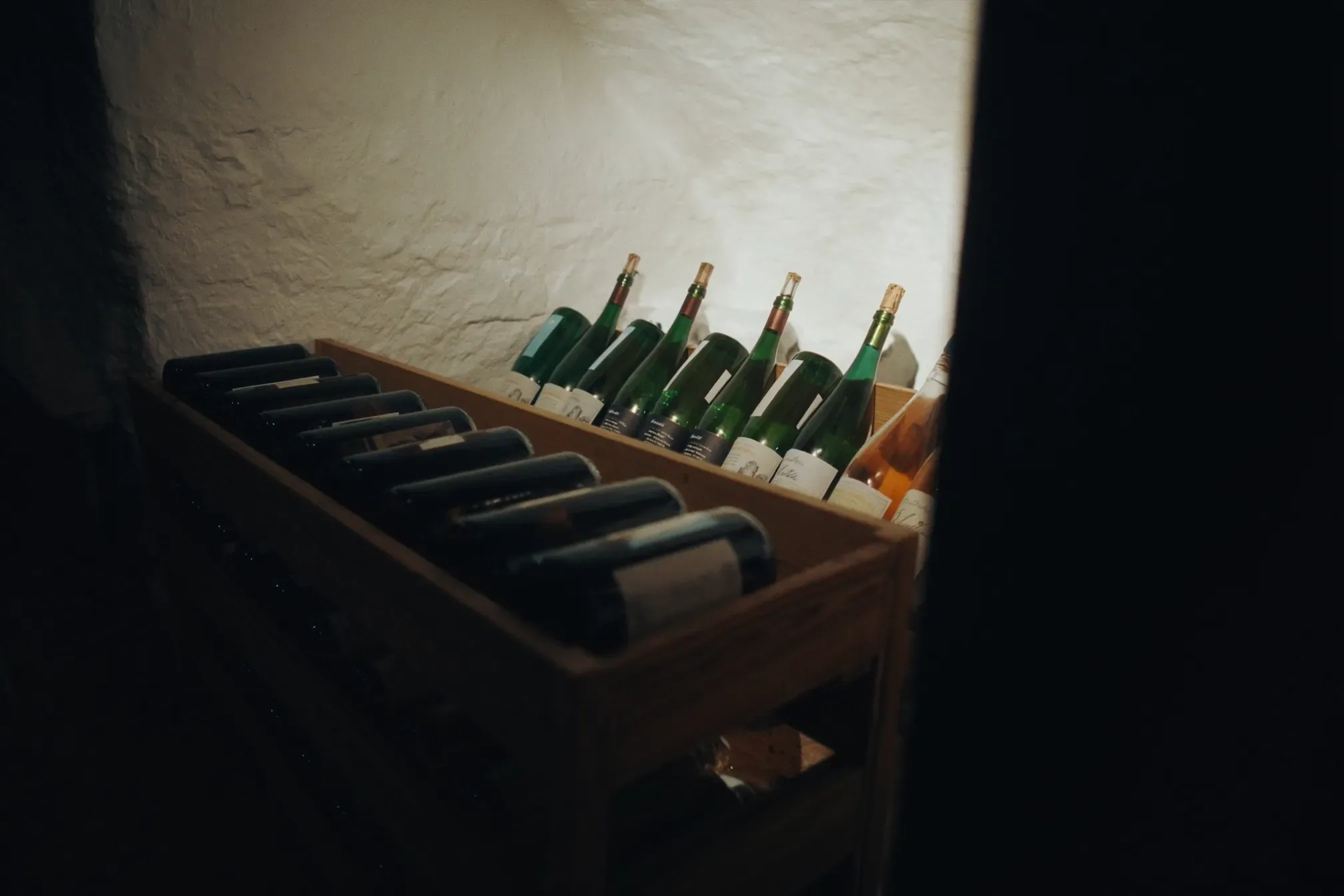
Storing wine well comes down to a short list: a cool, steady temperature, darkness, reasonable humidity, no vibration, no strong smells, and corked bottles lying down. You don't need a cellar to get most of that right. You need to know which rules matter for the wine you own and how long you plan to keep it.
Here is how we explain it to clients, from the bottle you'll open on Friday to the case you want to drink in fifteen years.
Temperature: steady beats perfect
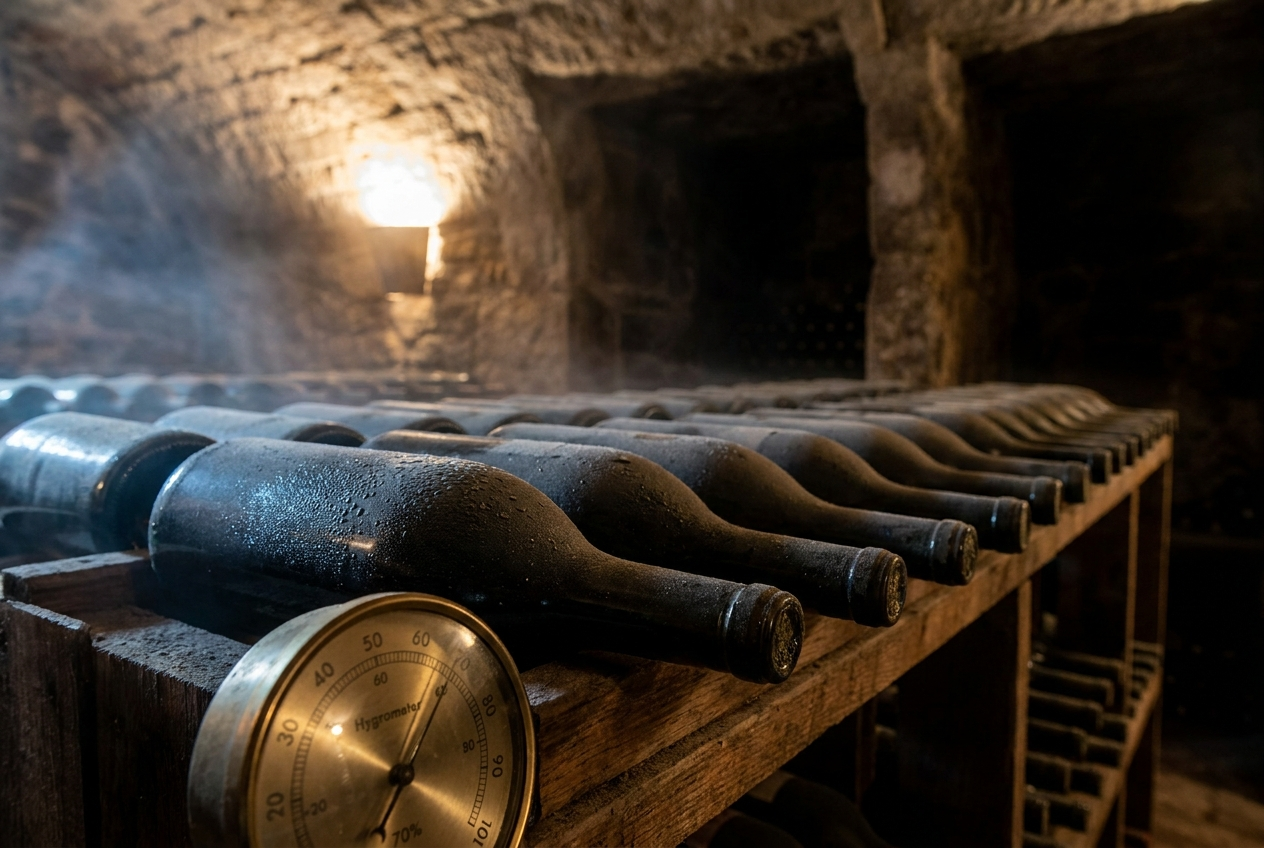
The target for every wine, red, white, sparkling, or fortified, is about 55°F (13°C). Anywhere from roughly 50–59°F (10–15°C) is a sound place to keep wine for years. Store everything at the same temperature and adjust at serving time.
The more important rule is stability. When wine warms it expands and presses on the cork; when it cools it contracts. Daily cycling, repeated for months, can work air past the cork and speed oxidation. A spot that holds a steady 62°F (17°C) is a better home for wine than one that averages 55°F but swings ten degrees every afternoon. Slow seasonal drift, over weeks and months, is much more forgiving.
Heat is the real enemy. Above about 70°F (21°C), wine ages noticeably faster, and sustained heat in the 80s°F can cook it, leaving flat, stewed fruit and sometimes a cork pushed up or a sticky ring of seepage around the capsule. Our pillar guide to ideal cellar temperature and humidity covers the ranges, the aging trade-offs, and serving temperatures by style in full.
Humidity
For bottles you'll keep a year or two, humidity barely matters. For long holds, aim for about 60% relative humidity; anything from 50 to 70% is fine. Very dry air, below about 40% for long periods, can dry the outer end of the cork and let a little wine evaporate over the years. Air that stays above roughly 75% won't hurt the wine, but it molds labels, cardboard cases, and wood racks.
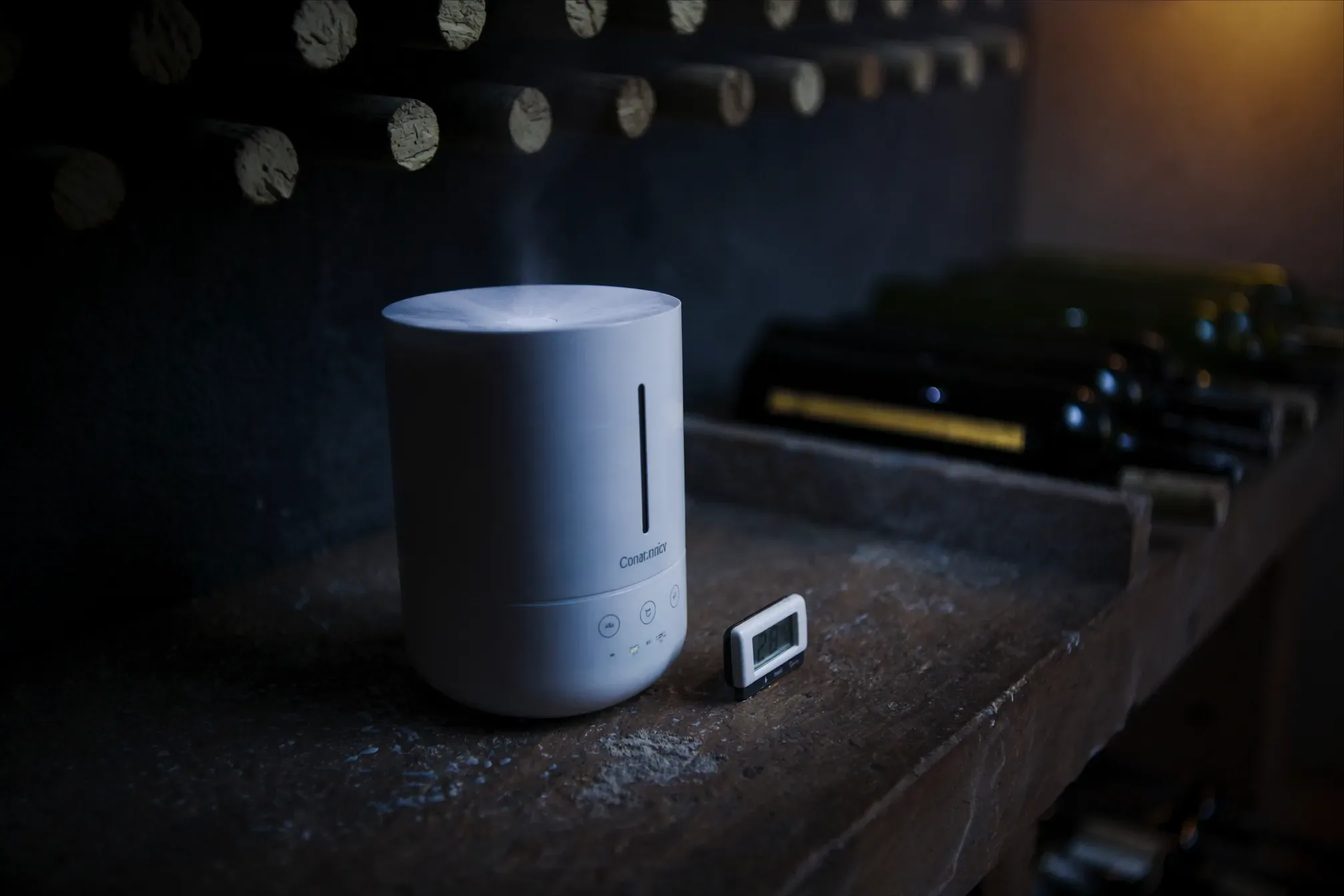
Most homes run drier than that in winter. If you're building a dedicated room, our guides to wine cellar humidifiers and cellar humidity and mold go further.
Light
Light, and ultraviolet light in particular, damages wine. The best-known fault is light strike: light triggers a reaction involving riboflavin and sulfur-containing amino acids in the wine, which produces sulfur compounds that smell of cooked cabbage or wet wool. White, rosé, and sparkling wines are most at risk, because they are often bottled in pale glass and have fewer protective compounds than reds.
Glass color sets how much protection a bottle gets:
- Clear glass blocks very little of the light that causes light strike. A rosé in a clear bottle on a bright shelf can be affected within hours to days, not months.
- Green glass filters some of it, less than most people assume.
- Brown or amber glass blocks the most, which is one reason beer and some whites use it.
The practical rule is simple: keep wine in the dark, or at least out of direct sun and away from fluorescent tubes. If you leave bottles in their cardboard case, light isn't a concern. In a cellar with lighting, LEDs on a timer or occupancy sensor give off very little UV and very little heat.
Vibration
Constant vibration is generally thought to disturb sediment in older reds and may speed some chemical changes, though the research on wine specifically is thin. We don't lose sleep over passing trucks. We do keep wine off the top of the fridge, away from the washer and dryer, and out of closets that share a wall with a furnace or a pump.
The bigger source of disturbance is usually you. Move bottles as little as possible, and decide where each one lives before it goes in the rack. An inventory app helps here, because you stop pulling bottles out to read labels.
Should wine be stored on its side?
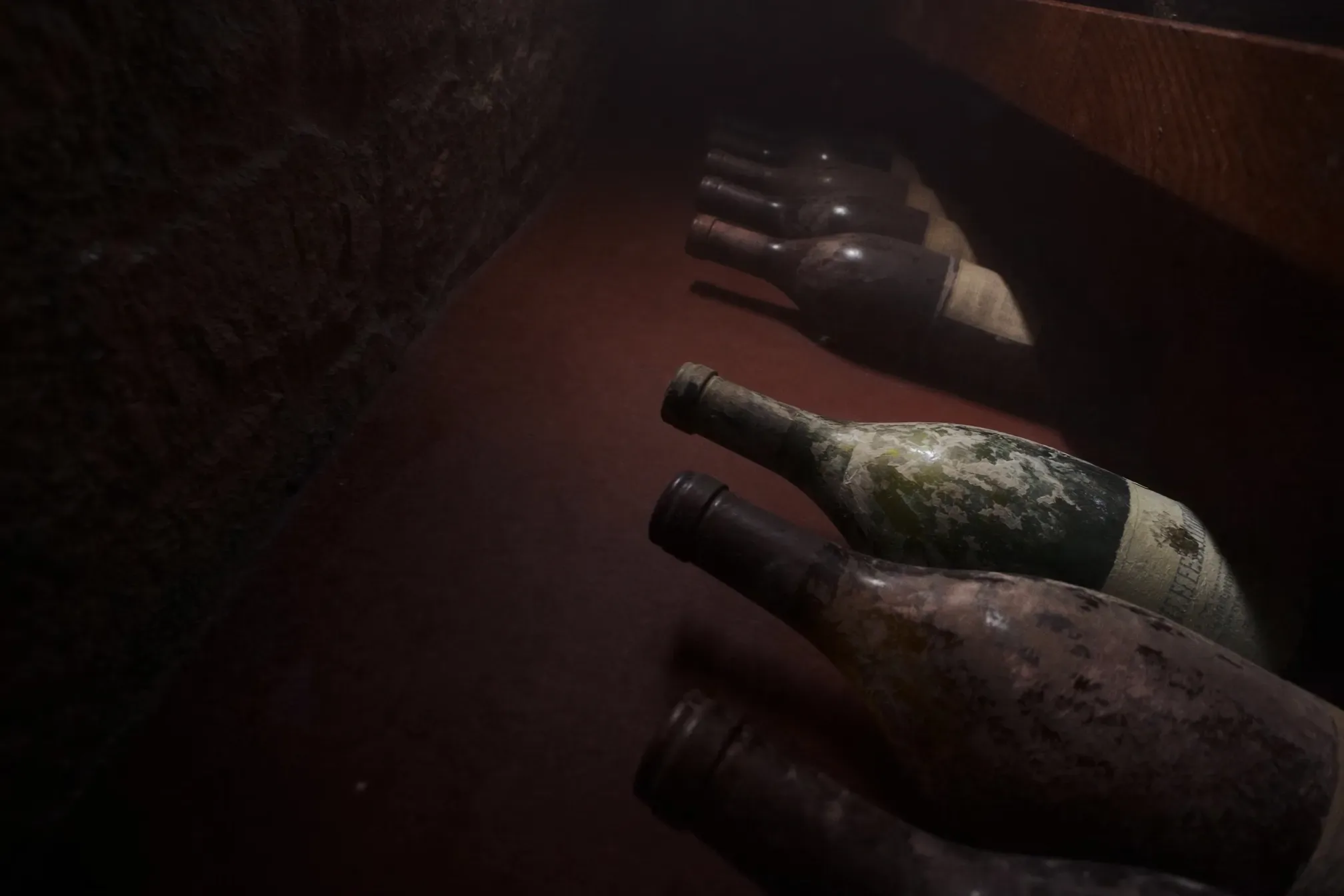
For corked wine you plan to keep more than a year or so, yes. Store it on its side. That is still the safe, standard practice, and it's how every cellar we build is racked.
The traditional reason is that wine against the cork keeps it moist and swollen, so it seals. The research is more nuanced than that. A 2005 study from the Australian Wine Research Institute found that bottle orientation had little effect on how the wines it tested developed, and cork industry researchers have since pointed out that the air in the neck of a sealed bottle is close to 100% humidity. In other words, the inner face of the cork stays moist even when the bottle stands upright.
So why lie it down? Because the evidence is mostly from limited trials, and the downside of being wrong falls on your best, oldest bottles. Lying bottles down costs nothing, keeps them stable, and lets you see sediment settle along one side. There's also a practical benefit nobody disputes: horizontal racking holds more bottles per square foot. Our guide to wine cellar racking covers layouts.
What can stand upright:
- Screwcap and synthetic-closure bottles. They don't depend on cork moisture. Store them however is convenient, though horizontal still saves space.
- Corked wine you'll drink within a few months. Upright on a cool, dark shelf is fine.
- Sparkling wine is a special case: the pressure in the bottle keeps the headspace humid, and some producers suggest upright storage is acceptable. On its side is still the norm for long holds.
Odors
Cork is permeable to a small degree, and over long storage, strong smells in the room may find their way into the wine. Keep wine away from paint, solvents, gasoline, cleaning products, and garden chemicals. In a basement, that means not storing wine on the shelf next to the paint cans. A musty smell in a cellar is a sign of mold or excess moisture, and worth fixing for its own sake.
Where to store wine short term
You don't need a cellar for wine you'll drink within a year or two. You need the coolest, darkest, steadiest spot in the house.
| Option | Typical conditions | Good for |
|---|---|---|
| Interior closet, lower floor | House temperature, often 65–72°F (18–22°C), dark | Wine you'll drink within about a year |
| Passive basement corner | Often 55–65°F (13–18°C), slow seasonal drift | A few years, longer if it stays cool in summer |
| Compressor wine fridge | Set to 55°F (13°C), steady | Short or long term, within its capacity |
| Kitchen fridge | About 35–40°F (2–4°C), dry, dark | Days to a few weeks, then serve |
| Kitchen counter, top of fridge, garage | Warm, bright, or swinging | Not recommended |
A closet on an interior wall, away from the water heater, laundry, and any exterior wall that takes afternoon sun, is the easiest choice. It runs at house temperature, so wine ages faster than it would in a cellar, but it's dark and steady. For a year's worth of drinking, that's fine.
A passive basement corner is often the best free storage in the house. Pick a north or east corner below grade, away from the furnace and laundry, and measure it with a logging thermometer through a summer before you trust it. If it stays under the mid-60s°F (about 18°C) and changes slowly, it will hold wine for years. Our guide to designing a small passive cellar explains when this works, and the basement wine cellar guide covers turning a corner into a real room.
A wine fridge gives you 55°F on demand. Compressor models hold temperature better in a warm room than thermoelectric ones, which struggle when the room passes the high 70s°F (about 25°C). Keep it out of direct sun and give it the ventilation clearance its maker specifies.
The kitchen fridge: myths and reality
Myth: the kitchen fridge ruins wine. Not in the short term. At about 35–40°F (2–4°C), it's too cold for aging, because it slows development almost to a stop, but a few weeks in the fridge does no harm. That's where the whites and sparkling you plan to open soon belong.
Myth: the fridge dries corks out in days. Frost-free fridges do run dry, and over many months that can matter for the cork. Over a few weeks, it doesn't.
Reality: it's the wrong place for long-term storage. It's too cold for aging, it's dry, the door gets opened constantly, and the compressor vibrates. Think of it as a staging area, not storage.
How long does opened wine last?
Once the cork is out, oxygen does the damage. The fridge is your friend here for every style, reds included, because cold slows oxidation. Re-cork the bottle (or use a stopper) right after pouring, refrigerate it, and take reds out 20 to 30 minutes before you drink them.
| Style | Opened, re-corked, in the fridge |
|---|---|
| Sparkling, with a sparkling stopper | 1–3 days |
| Light white and rosé | 3–5 days |
| Full-bodied white | 3–5 days |
| Light-bodied red | 2–3 days |
| Full-bodied red | 3–5 days |
| Sweet white (Sauternes, late harvest) | 3–7 days |
| Port | 1–4 weeks, longer for tawny |
| Madeira | Several weeks or more |
| Fino and Manzanilla Sherry | 1–3 days, like a white |
These are ranges, and wines vary. Tannic, high-acid wines hold up better than soft, fruity ones. A few habits help:
- Pour into a smaller container. Less air in the bottle means slower oxidation. A clean half bottle, filled to the top, works well.
- Use the original cork or a fitted stopper. Either is fine. Vacuum pumps and inert gas sprays can buy a day or two.
- Trust your nose. When a wine smells flat, nutty, or like vinegar, it's gone. It won't hurt you, but cook with it instead.
Which wines are worth aging?
Most wine sold today is made to drink young, within a year or two of release. Aging it won't make it better; it just fades. A smaller group of wines, usually with good acidity, tannin, sugar, or concentration, improves with time in the bottle.
As broad, hedged ranges from the vintage date, for wines from good producers:
- Everyday reds, whites, and rosé: drink within 1–3 years.
- Good Pinot Noir, Rioja, Chianti Classico, quality Chardonnay: often 3–10 years.
- Classed Bordeaux, Napa Cabernet, Barolo, Brunello, Northern Rhône Syrah: commonly 10–20 years, the best longer.
- Riesling (dry and sweet), Chenin Blanc, white Burgundy: 5–15 years, sweet styles often much longer.
- Vintage Champagne: around 5–15 years.
- Sauternes and vintage Port: 15–30 years, sometimes far more.
These are general patterns, not promises. Vintage, producer, and how the bottle has been stored all move the window. If you buy a case of something age-worthy, open a bottle every few years and see where it is.
Quick checklist
- Around 55°F (13°C), and steady matters more than the number
- Under 70°F (21°C) at all times
- Dark: no sun, and no fluorescent tubes on clear glass
- About 60% humidity (50–70%) for long holds; don't worry about it short term
- Corked bottles on their side if you're keeping them more than a few months
- Screwcaps can stand
- Away from appliances, chemicals, and strong smells
- Kitchen fridge for days or weeks, not years
- Opened bottles re-corked and refrigerated, reds included
If your storage space runs warm in summer and you're thinking about a dedicated room, our guide to building a wine cellar is the place to start, and the BTU calculator will tell you what size of cooling unit a space needs. If you'd like a second opinion on a closet, a basement corner, or a full build, contact our experts.
FAQ
Frequently asked questions
- What is the best temperature to store wine?
- About 55°F (13°C) for every style of wine, red, white, sparkling, and fortified. Anywhere from roughly 50°F to 59°F (10–15°C) is fine as long as it stays steady. A spot that holds 60°F reliably is better than one that averages 55°F but swings daily.
- Should wine be stored on its side or upright?
- Store corked wine on its side if you plan to keep it more than a few months. Research suggests the humid air in the bottle's neck keeps the cork moist even upright, but lying bottles down is the safe practice for long storage and costs nothing. Screwcap and synthetic-closure bottles can be stored upright.
- Can I store wine in a closet?
- Yes, for wine you'll drink within about a year. Choose a closet on an interior wall, away from the water heater, laundry, and sun. At house temperature, wine ages faster than in a cellar, so a closet is not the place for long-term aging.
- Is it OK to keep wine in the kitchen fridge?
- For a few days to a few weeks, yes. At about 35–40°F (2–4°C), the fridge is too cold for aging and runs dry, so it's the wrong place for long-term storage. Use it to chill bottles you'll open soon and to keep opened bottles.
- How long does wine last after opening?
- Re-corked and refrigerated, most still reds and whites last about 3–5 days, light reds a little less, and sparkling wine 1–3 days with a proper stopper. Fortified wines like Port keep for weeks. Refrigerate opened red wine too, then let it warm for 20–30 minutes before pouring.
- Does light damage wine?
- Yes. UV and visible light can cause light strike, an off smell like cooked cabbage, especially in white, rosé, and sparkling wines in clear bottles. Clear glass offers little protection, green some, and brown the most. Keep wine in the dark or in its box.
- How long can you store unopened wine?
- Most everyday wine is made to drink within 1–3 years of the vintage. Age-worthy wines such as top Bordeaux, Barolo, vintage Port, and quality Riesling can improve for 10–30 years or more in good storage. Check the producer's guidance for a specific bottle.