guide
Ideal wine cellar temperature & humidity
The numbers everyone repeats, 55°F and 60% RH, are close enough, but the real answer depends on what you're storing and how long. Here's the actual range.
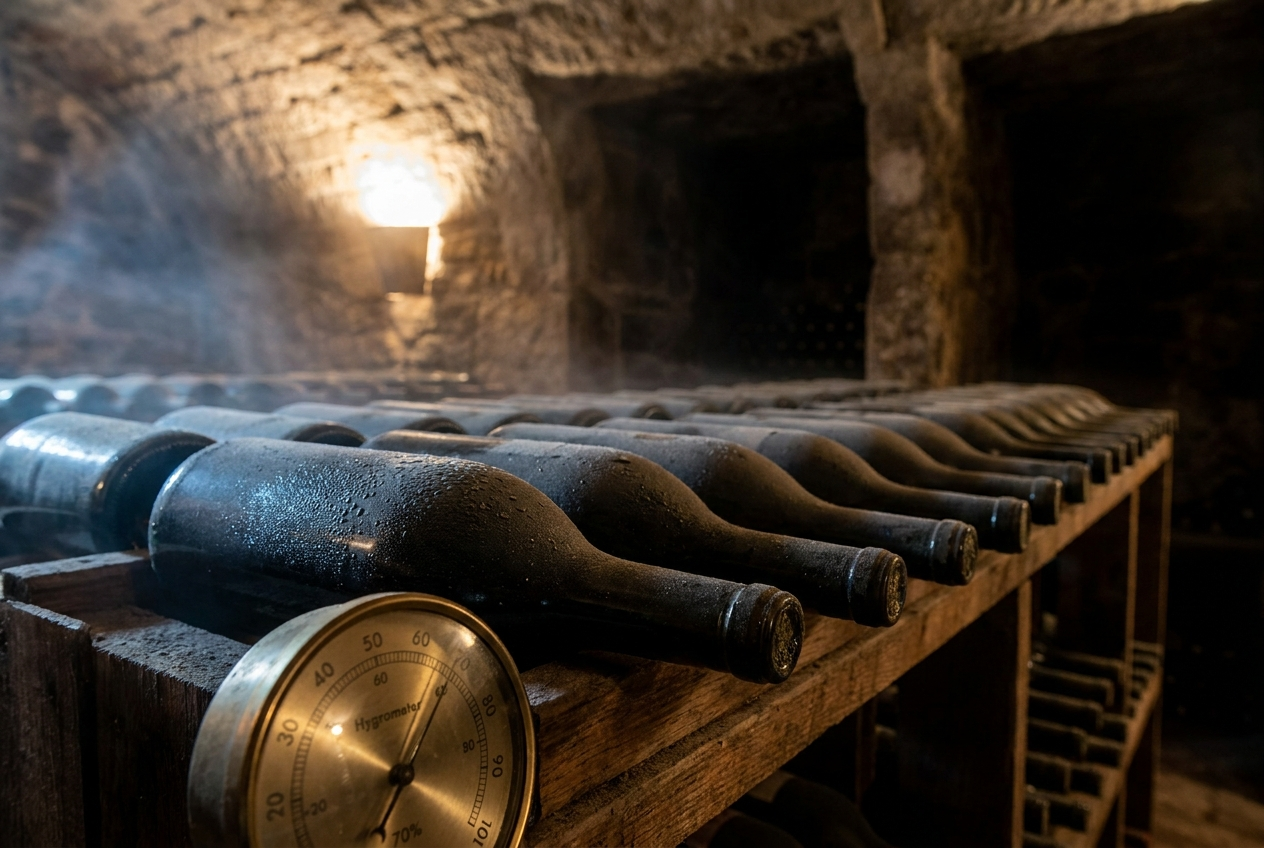
The conventional wisdom is 55°F and 60% relative humidity. That number isn't wrong, but it's a single point in a band, and the band is wider than most people think. Here's the actual range, why it matters, and which end to pick.
Temperature
Wine ages chemically. Higher temperatures speed those reactions; lower temperatures slow them. The trade-off:
- 45–52°F: very slow ageing, good for long holds, but young wines stay closed
- 53–58°F: the sweet spot for most collections; balances ageing rate and accessibility
- 59–65°F: accelerated ageing, fine for wine you'll drink within 2–3 years
More important than the absolute number: stability. Wine handles 55°F year-round better than it handles 52°F in winter and 60°F in summer. A cellar that swings 8°F per season is harder on wine than one that holds steady at 60°F.
Humidity
The fear is dried-out corks. The reality is corks dry from the inside (via the wine) far faster than from the outside. Cellar humidity is more about label preservation and avoiding extremes than about cork integrity.
- Below 40% RH: labels can curl, capsules can lift on long holds
- 50–70% RH: the practical range for residential cellars
- Above 75% RH: mold risk, especially on cardboard cases and wood racks
What to do if your numbers are off
Before changing equipment, measure for a full week with a logging hygrometer. One-off readings tell you almost nothing because both temperature and humidity vary on daily cycles tied to your home's HVAC and the time of day.
If readings are genuinely off, in order of probable cause:
- Door seal leaking, by far the most common
- Insulation gap (often around a vapor barrier penetration)
- Cooling unit undersized; see our BTU sizing guide
- Cooling unit oversized (short-cycling); same guide
Only the last two require new equipment.
Keep reading