guide
Wine cellar doors: how to choose a door for your wine cellar that actually seals
The door is the weakest point of any cellar envelope. What to specify for insulation, seals, glass, wood, and hardware, and the common mistakes that cost you cooling capacity.
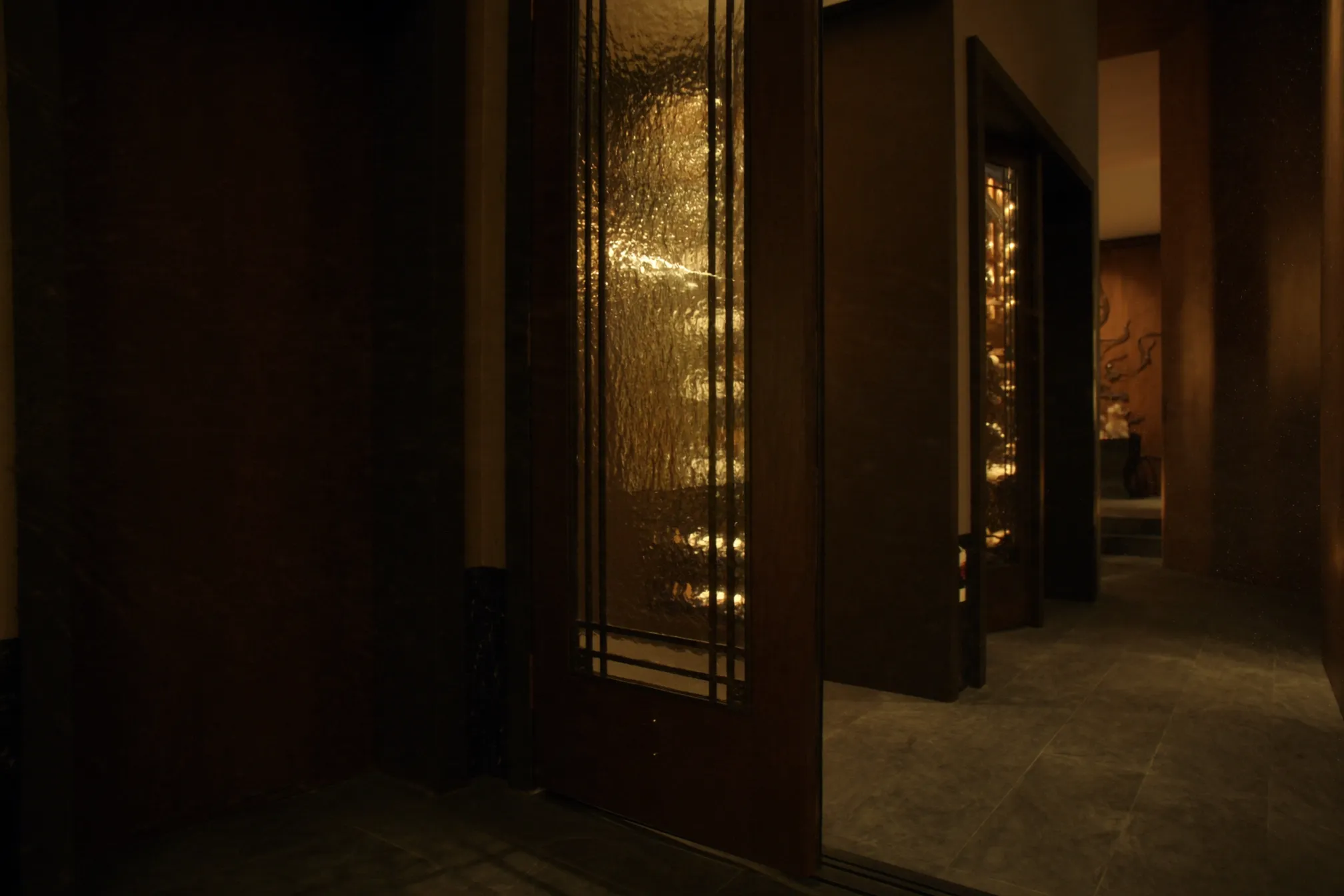
Most people choose a wine cellar door the way they choose a front door: by how it looks. That is the second question. The first is whether it keeps cold air in, because a cellar door does a harder job than almost any other door in the house.
Here is what we look for in a door for a wine cellar, how glass and wrought iron change the picture, and the mistakes we see most often.
Why the door is the weakest point
A well-built cellar wall is insulated to R-19 or better, with a vapor barrier on the warm side. The door sits in that wall as a rectangle of much lower performance, and it moves. Every gap around it is a hole in the envelope.
Two things make that hole worse than it looks:
- Cold air sinks. At 55°F (13°C), cellar air is denser than the 72°F (22°C) air outside. It pours out through any gap at the bottom of the door, and warm air is drawn in at the top to replace it. A 1/4" gap under a 36" door is a hole of about 9 square inches running all day.
- The door gets opened. Every opening swaps a slug of cold air for warm, humid air. That is a real load, which is why our BTU calculator asks how many times a day you open the door.
“
You can insulate the walls perfectly and still lose the cellar at the door. Seals matter more than the slab.
”
Exterior-grade vs interior doors
The single most useful rule: specify an exterior-grade door, even though the door sits inside the house. Exterior doors are built to separate two different climates, which is exactly what a cellar door does.
What that buys you:
- A solid or insulated core. Either solid wood or a foam-filled slab, never hollow.
- Thickness. Exterior-grade doors are typically 1-3/4" thick, against 1-3/8" for most interior doors. Some purpose-built cellar doors go thicker still.
- A real frame with weatherstripping. Exterior prehung units come with a rabbeted jamb, compression seals, and a threshold. Interior doors come with none of that.
R-values, honestly
Even a good door is weak next to the wall around it. As rough ranges, a solid wood door rates around R-2 to R-3, and an insulated foam-core fiberglass or steel door rates around R-5 to R-7. Compare that to an R-19 wall and you see the problem.
The honest takeaway is that the R-value gap between a hollow-core door and a solid wood door is smaller than people expect. What separates them in practice is air sealing, warping, and durability. A solid door with a tight four-sided seal beats a higher-rated door that leaks at the bottom.
| Door type | Typical core | Approx. R-value | Cellar verdict |
|---|---|---|---|
| Hollow-core interior | Cardboard honeycomb | R-2 or less | Never. Warps, no seals, no frame |
| Solid wood, exterior-grade | Solid or engineered stave core | R-2 to R-3 | Good with a full perimeter seal |
| Insulated fiberglass or steel | Polyurethane foam | R-5 to R-7 | Best thermal performance per dollar |
| Wood door with insulated glass | Wood frame, double-pane unit | R-2 overall | Good if sealed and the glass is insulated |
| Single-pane decorative glass | Single lite | About R-1 | Avoid. Condenses and leaks heat |
Weatherstripping on all four sides
A cellar door needs a seal on every edge, not just the three that touch the jamb:
- Jambs and head. Compression or bulb weatherstripping set into a kerf in the frame. The door should close against it with light, even pressure.
- Bottom. A door sweep, an automatic door bottom that drops when the door closes, or a threshold with a seal. This is the edge that matters most, because the bottom is where cold air escapes.
Check the seal with a flashlight at night: one person inside the cellar with the light, one outside with the room dark. Anywhere you see light, air is moving.
Self-closing hardware
The most expensive door in the world does nothing standing open. People carry a case in, get distracted, and the door sits ajar for an hour.
Fit spring hinges or a door closer so the door shuts and latches on its own. Pair it with a latch that pulls the door firmly into the weatherstripping. If you use a smart lock or keypad, some models can alert you when the door is left unlatched, which is worth having.
Glass doors and condensation
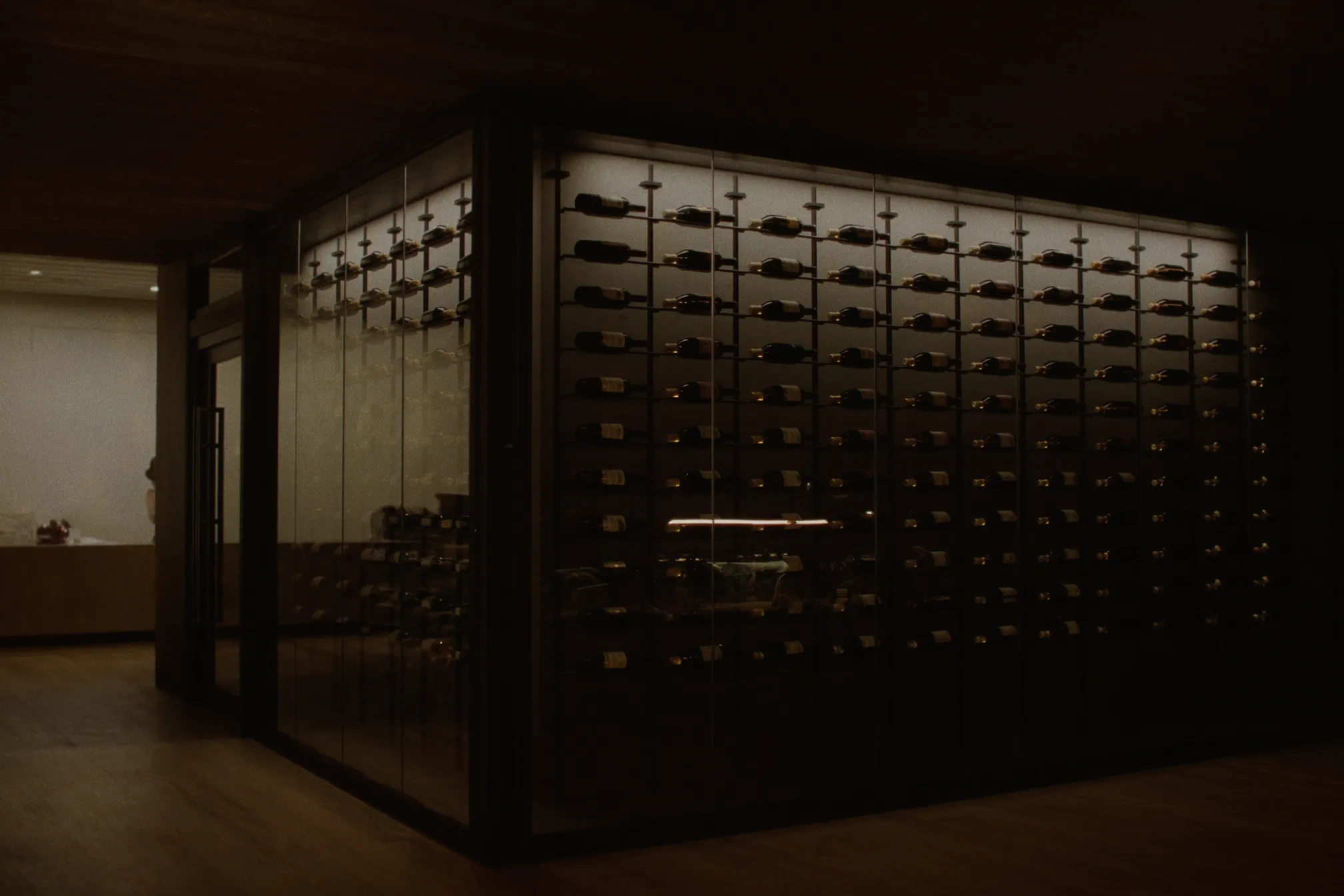
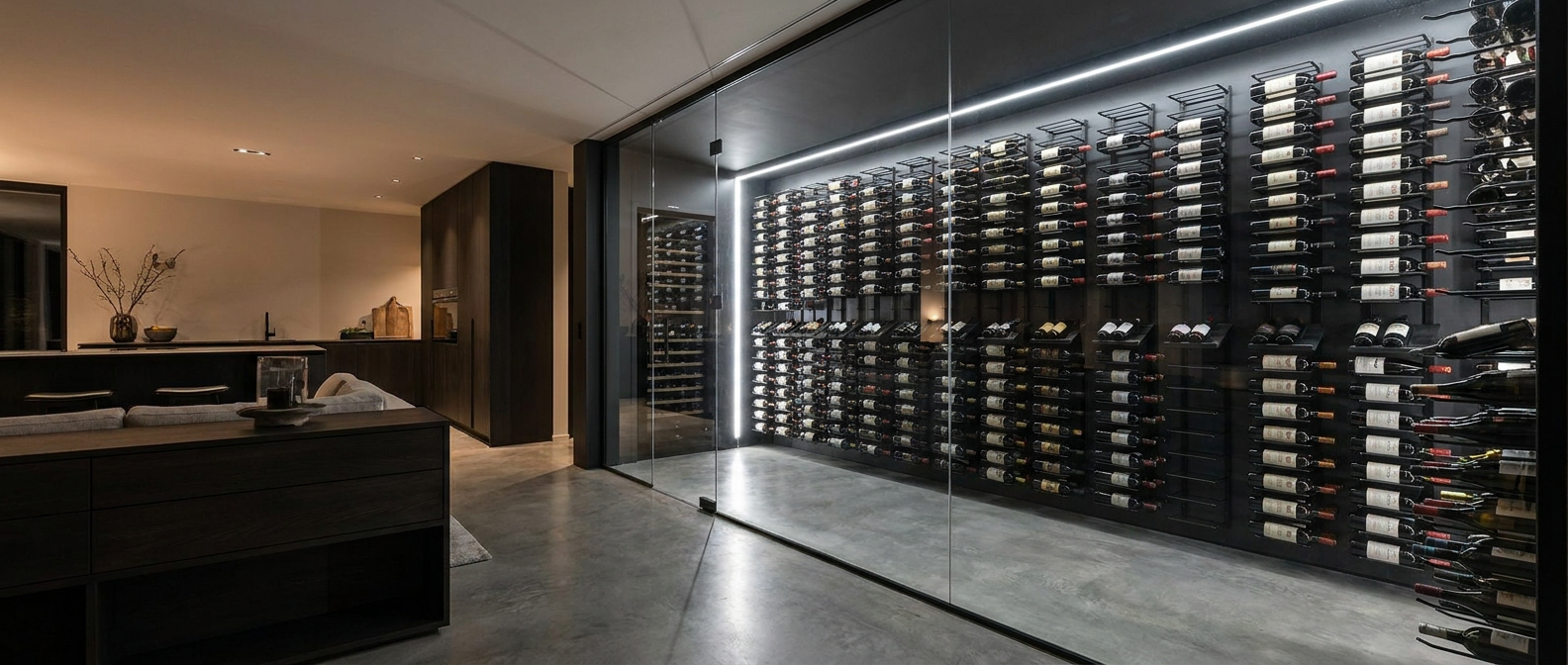
A glass wine cellar door is the most requested option, and it can work well. The rules are about the glass, not the frame.
- Insulated glass, not decorative glass. Specify a sealed insulated glass unit (two panes with a sealed gap), ideally with a low-e coating. Single-pane glass rates around R-1; double-pane around R-2.
- Safety glazing. Building codes require tempered or laminated safety glass in doors. Any reputable door maker supplies it.
- Condensation. In a humid summer room at 75°F (24°C), the dew point can sit near 60°F (16°C). The room-side face of single-pane glass on a 55°F cellar will run below that and fog or drip. An insulated unit keeps the outer pane warmer, which usually keeps it dry.
A glass door adds heat load in proportion to its glass area. When you run the BTU calculator, add the door glass to your total glass area and pick the matching glass type. A full-lite door is roughly 15 to 20 square feet of glass, which is enough to show up in the result. For whole glass walls and frameless glass doors, see our guide to glass wine cellars.
Wood species and warping
A cellar door lives with a split personality: cool and humid on one face, warm and drier on the other. That moisture difference across the slab is what makes wood doors cup and twist, and a warped door no longer meets its seals.
What helps:
- Stable construction. An engineered stave core with a hardwood veneer or thick face is more stable than a slab of solid boards.
- Stable species. Mahogany and similar dense, stable hardwoods are common for good reason. Ask the maker which species they warrant for a cellar application.
- Finish all six sides. Top and bottom edges included. An unsealed edge absorbs moisture faster than the faces and drives warping.
Wrought iron doors
Wine cellar doors in wrought iron look the part, but iron on its own does not seal anything. A proper iron cellar door has an insulated glass panel behind the ironwork, with the glass doing the thermal and air-sealing work and the iron doing the looks.
Things to ask for:
- A sealed, insulated glass unit behind the iron, not a single pane.
- Weatherstripping on all four sides and a sealed threshold, same as any other cellar door.
- Gaskets on any operable "speakeasy" panel or opening glass insert.
- A thermally broken frame if the maker offers one. Steel conducts heat well, so a solid steel frame can sweat on the warm side.
Swing direction and racking clearance
Plan the swing before you plan the racks. A 36" door swinging into the cellar sweeps a 36" quarter circle you cannot fill with racking. In a small cellar, or a cellar under the stairs, that can be a big share of the floor.
An out-swinging door keeps that space for wine. If the hinges end up on the outside, use non-removable hinge pins so the door cannot be lifted off. Also check that the open door does not hit a light switch, a thermostat, or the cooling unit grille.
Locks and security
A cellar is a room full of valuable, portable goods. At minimum, fit a keyed deadbolt or a keypad lock. Keypads are popular because they avoid loose keys and let you change codes.
Standard openings vs custom
Standard US door sizes (widths of 30", 32", or 36" at 80" tall) are the cheapest route by a wide margin. A prehung exterior-grade door in a standard size is widely available and easy to install well.
Custom sizes, arched tops, and angled heads under stairs all push cost up and usually mean a specialist cellar door maker. That is fine, but decide early, because the rough opening has to be framed to suit. If you are building a basement wine cellar, a standard opening with a good exterior-grade door is often the best value in the whole project.
What a cellar door costs
These are broad ranges for the door and hardware. Installation, framing, and finishing are extra and vary by region.
- Prehung insulated exterior door, standard size: a few hundred dollars to around $1,000. Often the best performer per dollar.
- Purpose-built wood cellar door, with or without glass: roughly $1,500 to $5,000, more for custom sizes and premium species.
- Wrought iron with insulated glass: commonly $3,000 to $10,000 or more.
- Glass systems: often several thousand dollars and up, driven by size, glass spec, and hardware.
Common mistakes
- Hollow-core interior door. No core, no seals, no frame. It will warp and it will leak.
- No sweep or threshold. The bottom gap is the biggest leak in most cellars we look at.
- An undercut or pet door. Any opening at floor level drains cold air continuously.
- No closer. A door left open undoes everything else on this list.
- Ignoring the door in the load calculation. Count the glass, count the openings, then size the cooling.
The short version
Specify an exterior-grade door, seal all four sides, add a closer, and use insulated glass if you use glass at all. Then size the cooling to the room you actually built. For targets the door is protecting, see ideal cellar temperature and humidity, and for how the door fits a glass-forward design, see designing a modern wine cellar.
If you are not sure what your opening needs, contact our experts before you order a door.
FAQ
Frequently asked questions
- What kind of door do you need for a wine cellar?
- An exterior-grade door with a solid or insulated core, typically 1-3/4 inches thick, with weatherstripping on all four sides including a sweep or sealed threshold at the bottom. A self-closing hinge or closer is strongly recommended.
- Can I use an interior door for a wine cellar?
- We do not recommend it. Interior doors are often hollow, have no weatherstripping, and are usually undercut at the bottom. They leak cold air and tend to warp in the humidity difference between the cellar and the house.
- Do glass wine cellar doors cause condensation?
- Single-pane glass often does, because its warm-side surface runs below the dew point of a humid room. A sealed insulated glass unit, ideally with a low-e coating, keeps the outer pane warmer and usually prevents fogging.
- Does a wine cellar door need to be insulated?
- Yes. Even an insulated door is far weaker than an insulated wall, so you want the best core you can get. Air sealing matters just as much: a well-sealed solid door outperforms a better-rated door with a gap at the bottom.
- How much does a wine cellar door cost?
- A prehung insulated exterior door in a standard size can cost from a few hundred dollars to around 1,000 dollars. Purpose-built wood cellar doors commonly run 1,500 to 5,000 dollars, and wrought iron doors with insulated glass often cost more.
- Should a wine cellar door swing in or out?
- Out-swinging is usually better, because an in-swinging door sweeps floor area you cannot fill with racking. If the hinges end up on the outside, use non-removable hinge pins for security.