guide
Designing a modern wine cellar
Glass walls, metal racks, integrated lighting: what makes a cellar feel modern, and how to keep it cool when display matters as much as conservation.
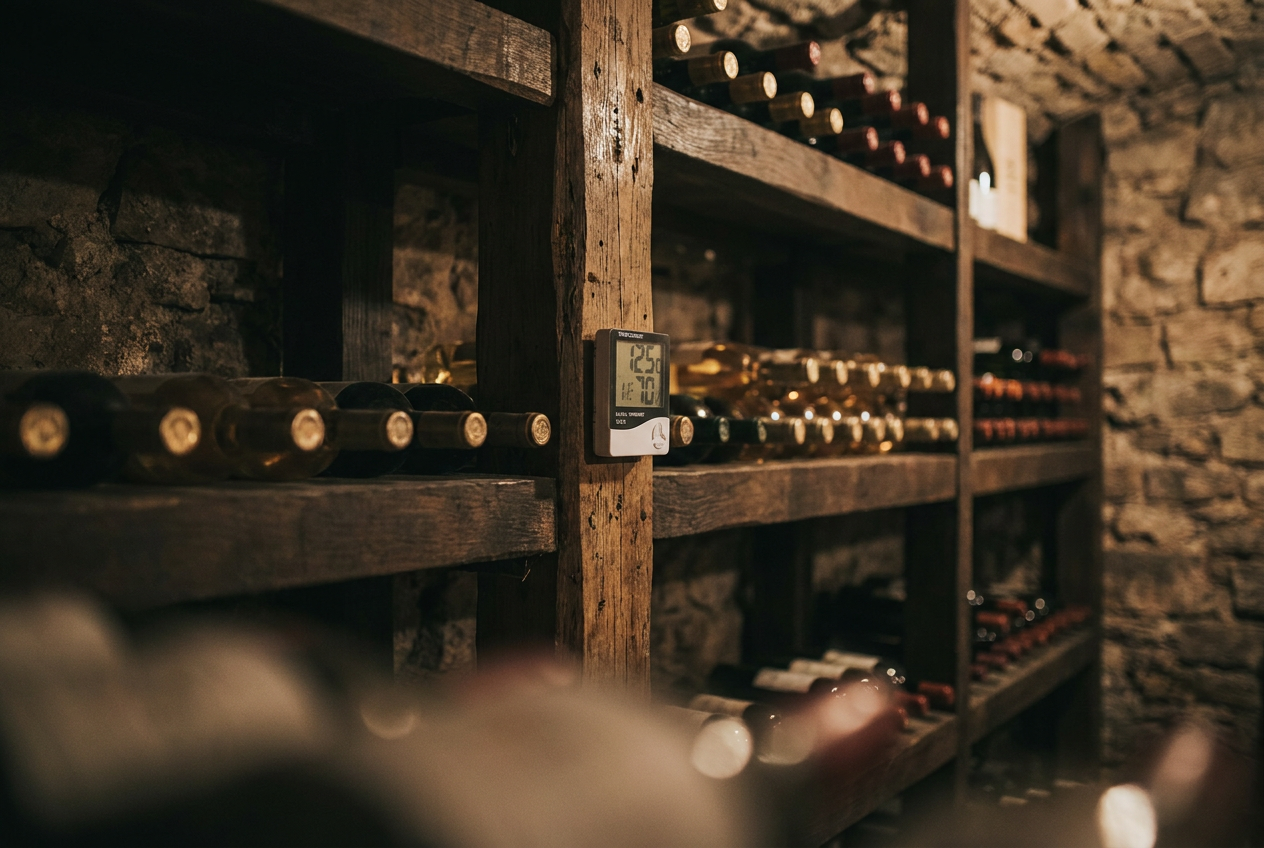
A traditional cellar hides wine. A modern cellar displays it. That single shift in priority, from storage to architecture, changes every decision that follows: materials, lighting, rack geometry, and the way the cooling system has to work to keep up with the glass.
Here is how we approach the modern cellar when display matters as much as conservation.
What "modern" actually means here
We use "modern" to describe a specific set of design moves, not a vague aesthetic preference:
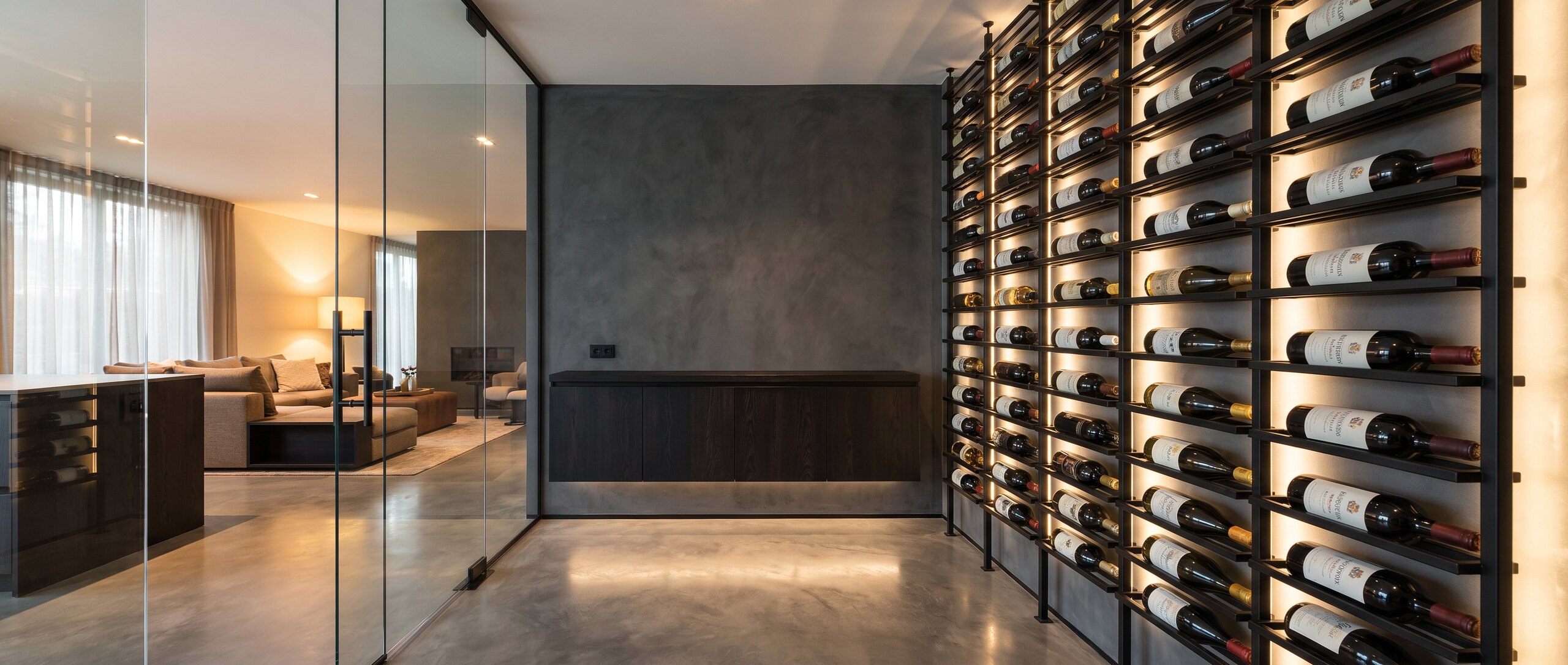
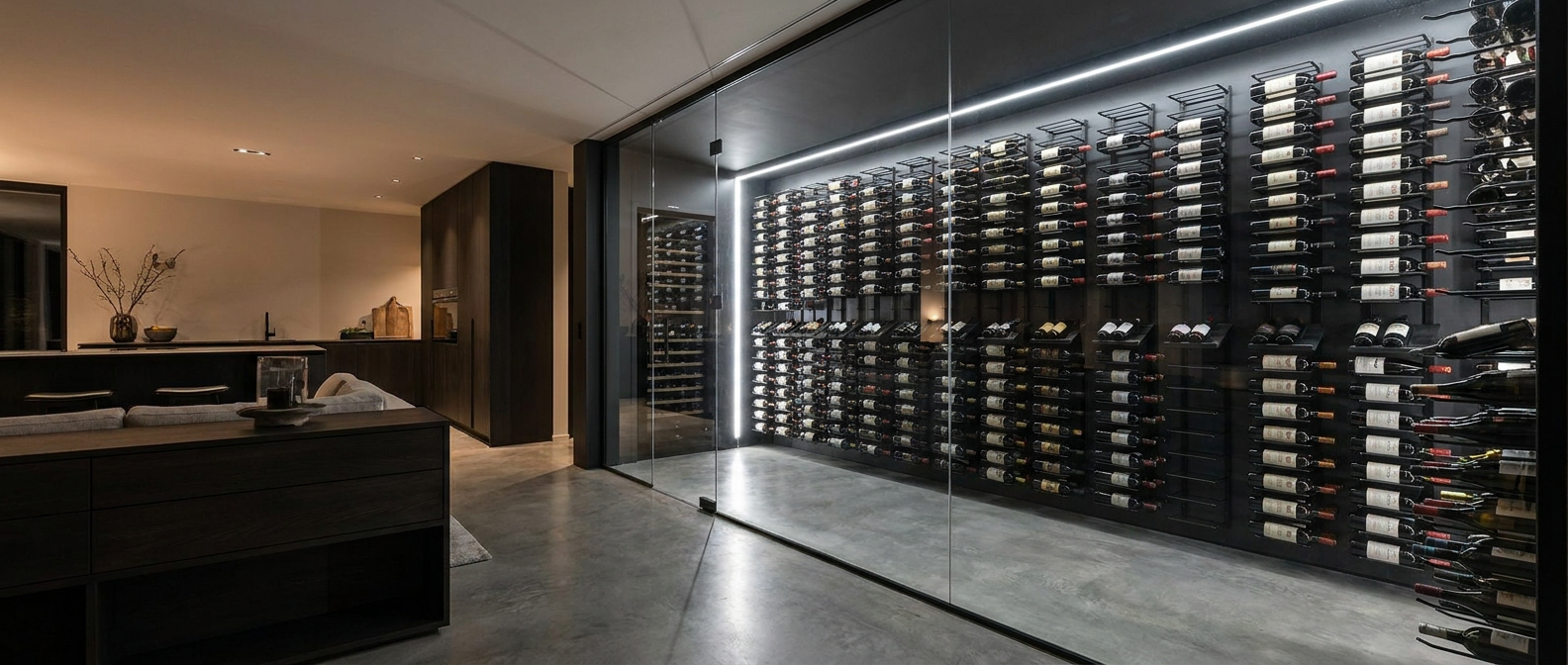
- A glazed face. At least one wall, often a full elevation, is a frameless glass partition between the cellar and the room it lives in.
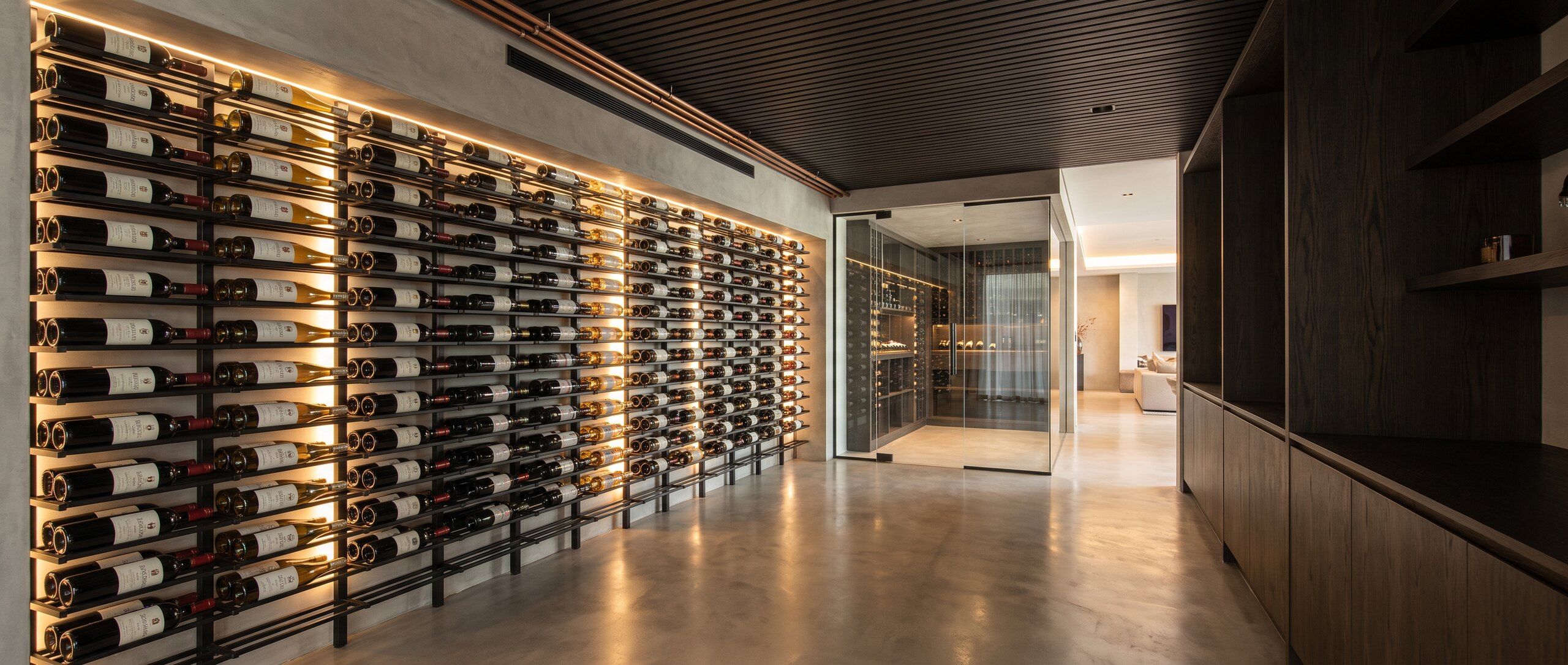
- Cantilevered metal racks. Slim blackened-steel rods that hold each bottle horizontally with the label visible, instead of the cubby grid that traditional wooden racks use.
- Integrated lighting. LED strip set into the rack itself, washing bottles from above or grazing the labels from the side. No pendant fixtures, no track heads.
- Hidden equipment. The cooling unit is moved out of sight, almost always a ducted split with the evaporator concealed in a soffit or above a closed rack.
If a project misses two of those four, it is doing something else.
Materials
The modern cellar palette is narrow on purpose. We use three or four materials and let proportion do the work:
- Polished concrete or large-format stone on the floor.
- Blackened or powder-coated steel for racks, frame, and ceiling trim.
- Frameless tempered glass for the partition.
- Wood, optionally, on one solid wall, in a single warm species (white oak, walnut) to give the room a counterpoint.
The wood wall is not decorative. It is also the easiest place to insulate properly, which matters when the rest of the envelope is glass.
Lighting
Two rules:
- No heat in the cellar. LED only, integrated low-voltage strips running cool. Halogen and incandescent fixtures throw enough heat to swing your load calculation.
- Light the bottles, not the room. Side-grazing strips at each shelf level make the labels readable and give the room its signature glow. Overhead fixtures wash out label detail and create reflections on the glass partition.
Aim for warm-white (2700K to 3000K) and a CRI above 90 so labels read true. Higher color temperatures push the cellar into refrigerator territory.
Why glass changes the cooling calculation
A glass wall is a thermal weakness even when it is excellent. Double-pane insulated glazing rates around R-2; an insulated solid wall is R-19 to R-30. That means a single full-height glass partition adds the heat load of roughly ten times its area in solid wall.
Two consequences:
- The cooling unit needs to be sized for the real load, not a textbook estimate based on cellar volume. Run the calculation with the glass as a discrete component.
- The cellar should not share a face with direct afternoon sunlight, even indirectly through an exterior window across the room. Solar gain through glazed cellar walls is the number one reason modern cellars fail their first summer.
The trade-off, named
A modern cellar that does what it should is a small luxury appliance embedded in your house: quiet, climate-controlled, and beautiful. It also costs more than a comparable traditional cellar, mostly because the equipment has to work harder and the finishes are unforgiving of cheap substitutes.
If you cannot commit to both halves, the equipment and the finishes, build a traditional cellar and put the wine behind a regular door. The worst modern cellars are the ones that hit the look and miss the climate.